
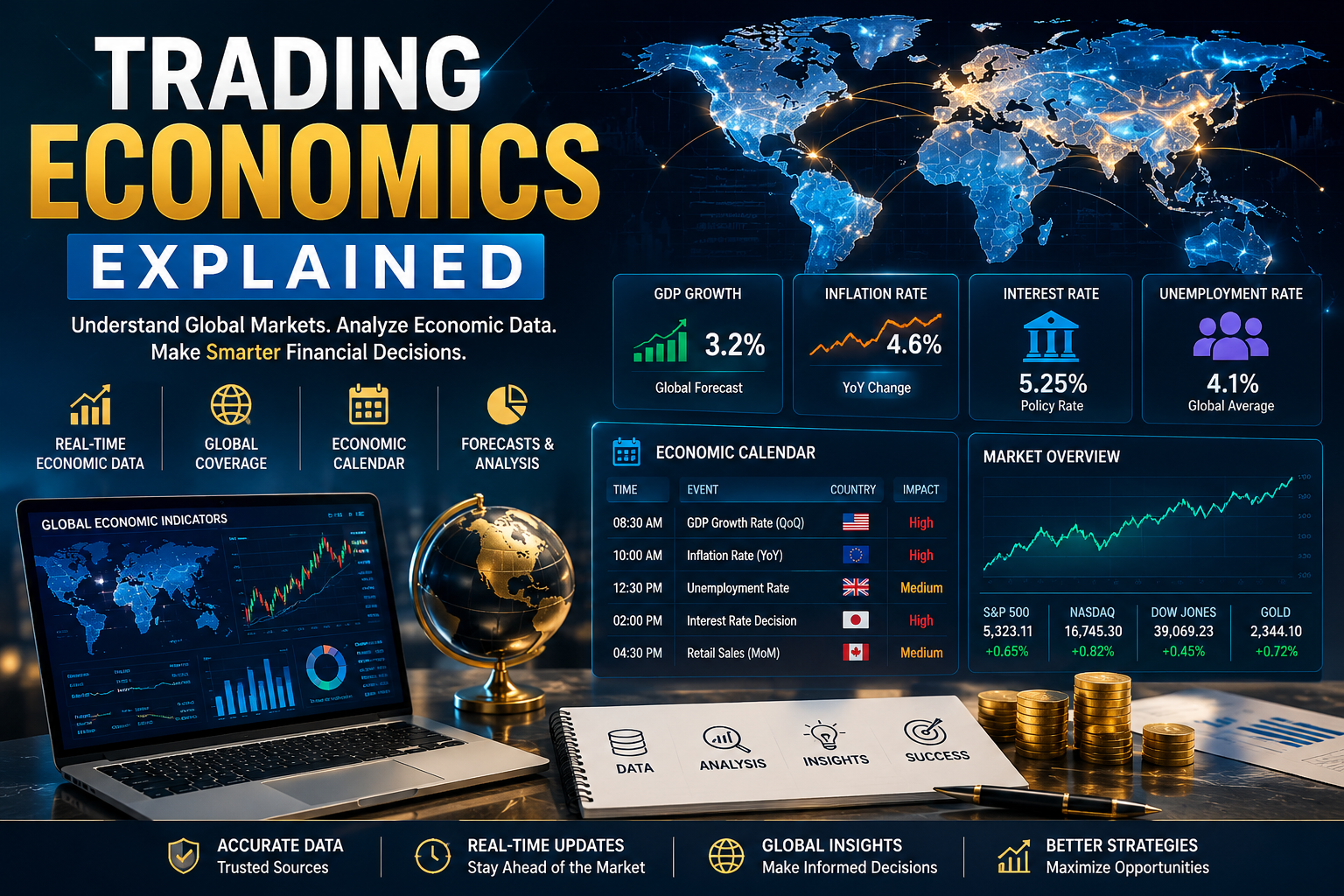
Inflation is one of the most important economic indicators tracked by investors and traders worldwide. Trading Economics Explained helps users understand how inflation affects purchasing power, interest rates, consumer spending, and overall economic growth. When inflation rises significantly, central banks often respond by increasing interest rates to control rising prices and stabilize the economy.
Trading Economics Explained provides detailed inflation statistics from countries around the world, allowing investors to compare trends, identify potential risks, and understand economic conditions more effectively. By analyzing inflation data through Trading Economics Explained, traders can better understand future market movements and develop more effective investment strategies. Many professional investors rely on Trading Economics Explained inflation reports to monitor changes in economic conditions before making major financial decisions.
Trading Economics Explained Best Practices
To get the most value from Trading Economics Explained, users should regularly monitor economic calendars, review forecasts, analyze historical data, compare indicators across multiple countries, and follow major economic announcements. By consistently using the platform, investors can gain a deeper understanding of market trends and economic conditions that influence financial markets.
One of the best ways to use this economic research tool is to combine economic analysis with a well-defined investment strategy. Instead of relying on a single indicator, users should analyze multiple data points, including GDP growth, inflation rates, employment statistics, interest rate decisions, and consumer confidence reports. This broader approach helps create a more accurate picture of economic conditions.
The platform is particularly useful for investors who want to identify opportunities before they become obvious to the wider market. Regularly reviewing forecasts and economic calendars can help traders prepare for major events that may create market volatility. This proactive approach allows investors to make better-informed decisions and manage risks more effectively.
Another important best practice is to compare current economic data with historical trends. Historical analysis helps users understand how markets have reacted to similar economic conditions in the past. This can provide valuable context when evaluating future market opportunities.
Combining economic data with technical analysis and fundamental research can help traders and investors develop stronger strategies and make more informed decisions. Consistent use of these resources can improve market knowledge, strengthen research capabilities, and support long-term investment success.
Trading Economics Explained Final Conclusion
Trading Economics Explained is one of the most valuable resources available for understanding economic conditions and financial markets. Whether users are analyzing GDP growth, inflation trends, interest rates, employment statistics, trade balances, or market forecasts, the platform provides reliable information that supports better decision-making.
One of the greatest strengths of this economic data platform is its ability to present complex information in an easy-to-understand format. Investors, traders, economists, business professionals, and researchers can all benefit from the insights it provides. The platform makes it easier to track economic performance, compare countries, monitor financial trends, and identify emerging opportunities.
It is not only useful for active traders but also for long-term investors who want to understand the broader economic environment. By regularly reviewing economic reports and forecasts, investors can make more informed portfolio decisions, reduce uncertainty, and improve their understanding of market dynamics.
As global markets become increasingly interconnected, access to accurate economic information becomes more important than ever. The platform helps users stay informed by providing real-time economic data, market forecasts, historical statistics, and detailed economic analysis. This information allows users to react more effectively to changing market conditions and economic developments.
Whether you are a beginner investor, professional trader, economist, researcher, financial analyst, or business owner, Trading Economics Explained offers the tools and insights needed to understand economic trends and navigate financial markets successfully. By consistently using these resources, users can improve market knowledge, identify opportunities, manage risks, enhance financial planning, and make smarter decisions based on reliable economic data.
Ultimately, this platform serves as a comprehensive resource for economic research, market analysis, and investment decision-making. For anyone seeking a better understanding of global economic conditions and financial markets, it remains one of the most trusted and valuable resources available today.
Trading Economics Explained and Investment Opportunities
To get the most value from Trading Economics Explained, users should regularly monitor economic calendars, review forecasts, analyze historical data, compare indicators across multiple countries, and follow major economic announcements. By consistently using the platform, investors can gain a deeper understanding of market trends and economic conditions that influence financial markets.
One of the best ways to use this economic research tool is to combine economic analysis with a well-defined investment strategy. Instead of relying on a single indicator, users should analyze multiple data points, including GDP growth, inflation rates, employment statistics, interest rate decisions, and consumer confidence reports. This broader approach helps create a more accurate picture of economic conditions.
The platform is particularly useful for investors who want to identify opportunities before they become obvious to the wider market. Regularly reviewing forecasts and economic calendars can help traders prepare for major events that may create market volatility. This proactive approach allows investors to make better-informed decisions and manage risks more effectively.
Another important best practice is to compare current economic data with historical trends. Historical analysis helps users understand how markets have reacted to similar economic conditions in the past. This can provide valuable context when evaluating future market opportunities.
Combining economic data with technical analysis and fundamental research can help traders and investors develop stronger strategies and make more informed decisions. Consistent use of these resources can improve market knowledge, strengthen research capabilities, and support long-term investment success.
Trading Economics Explained Final Conclusion
Trading Economics Explained is one of the most valuable resources available for understanding economic conditions and financial markets. Whether users are analyzing GDP growth, inflation trends, interest rates, employment statistics, trade balances, or market forecasts, the platform provides reliable information that supports better decision-making.
One of the greatest strengths of this economic data platform is its ability to present complex information in an easy-to-understand format. Investors, traders, economists, business professionals, and researchers can all benefit from the insights it provides. The platform makes it easier to track economic performance, compare countries, monitor financial trends, and identify emerging opportunities.
It is not only useful for active traders but also for long-term investors who want to understand the broader economic environment. By regularly reviewing economic reports and forecasts, investors can make more informed portfolio decisions, reduce uncertainty, and improve their understanding of market dynamics.
As global markets become increasingly interconnected, access to accurate economic information becomes more important than ever. The platform helps users stay informed by providing real-time economic data, market forecasts, historical statistics, and detailed economic analysis. This information allows users to react more effectively to changing market conditions and economic developments.
Whether you are a beginner investor, professional trader, economist, researcher, financial analyst, or business owner, Trading Economics Explained offers the tools and insights needed to understand economic trends and navigate financial markets successfully. By consistently using these resources, users can improve market knowledge, identify opportunities, manage risks, enhance financial planning, and make smarter decisions based on reliable economic data.
Ultimately, this platform serves as a comprehensive resource for economic research, market analysis, and investment decision-making. For anyone seeking a better understanding of global economic conditions and financial markets, it remains one of the most trusted and valuable resources available today.
xtpwxmedhdwilqjyfhidnerqrlueys
I have been exploring different gaming platforms for a while and finally found a hidden gem here. The interface is super smooth and the customer support team responds within minutes. Every weekend I look forward to joining the community for some casual fun and big wins. Give this spot a try and you will not be disappointed. su789club
Cảm ơn thông tin bổ ích. Nếu bạn quan tâm du học Hàn Quốc, Letco chuyên tư vấn lộ trình, chọn trường và xin visa với tỷ lệ đậu cao. Xem chi tiết tại letco.vn.